Bhutan forum highlights lessons from the WERELIS project and pathways for scaling women-led renewable energy solutions across the Hindu Kush Himalaya
- Renewable energy can turn reliable irrigation into higher farm productivity, stronger local economies, and reduced dependence on imported diesel and food.
- 62,400 acres of land with potential for RE-powered lift irrigation identified in Bhutan.
- RE-powered irrigation systems could create 14,750 green jobs and avoid 68,000 metric tonnes of CO₂ emissions annually.
- Estimated investment pipeline of USD 1.5 million based on 16 feasibility studies covering more than 1,000 acres of land.
- Regional experts from Bangladesh, Bhutan, India, Nepal and Pakistan discuss policy, financing and institutional pathways to scale renewable-energy-powered irrigation and unlock new renewable energy markets.
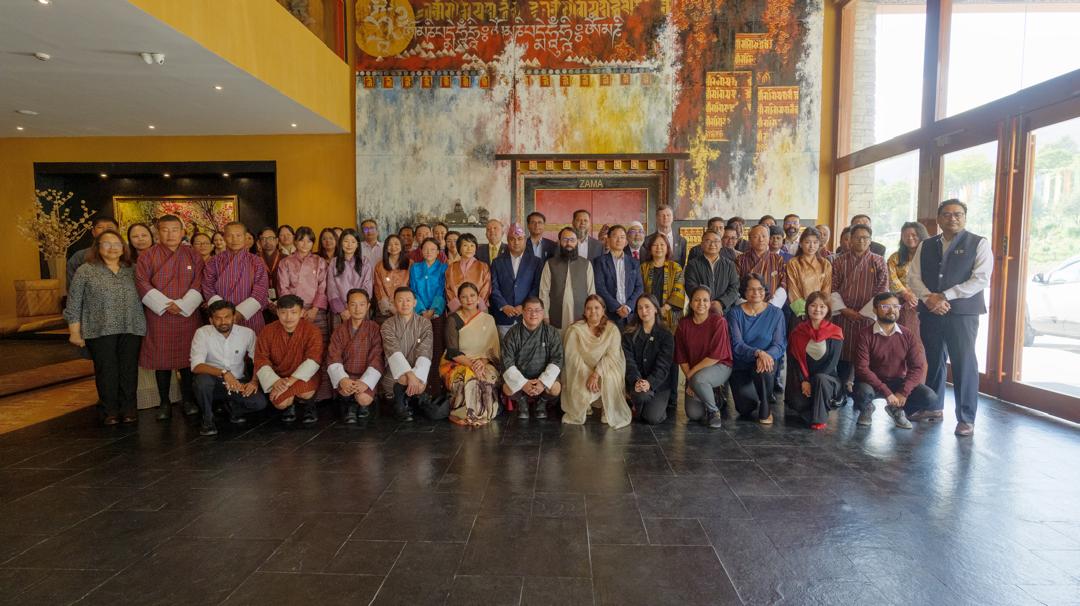
THIMPHU, Bhutan, 2 October 2026 – Renewable energy can play a transformative role in strengthening livelihoods, advancing gender equality and building climate-resilient agricultural systems across mountain regions, experts said at a regional forum held in Thimphu this week.
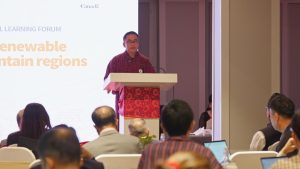
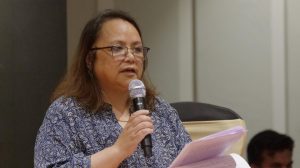
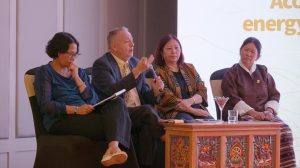
The forum, Accelerating inclusive renewable energy transitions in mountain regions, brought together policymakers, government representatives, development partners, researchers, practitioners, civil society, academia and private sector actors to share evidence and experiences of the role of renewable-energy-powered irrigation in transforming agricultural livelihoods in mountain regions. It also emphasised the critical role of women in this transition – not only as beneficiaries of new technologies but as operators, decision makers, and leaders.
“Women can be operators, technicians, entrepreneurs, decision-makers and leaders. WERELIS has sought to create these opportunities while addressing some of the barriers women face in accessing technical skills, resources and decision-making spaces. The project has generated practical tools and evidence, that demonstrate the importance of integrating technical, economic, social and gender considerations from the beginning of the planning process.” Dr. Sarala Khaling, Head of Resilient Economies and Landscapes, ICIMOD.
“It (the WERELIS project) has shown us that renewable energy solutions for mountain communities are not simply about installing technology. They are about people. They are about responding to local needs, strengthening livelihoods, building resilience, and ensuring that women have meaningful opportunities to participate in and benefit from the energy transition.” Karma P Dorji, Director General, DoE.
From access to agency
With 80% of Bhutan’s cultivable land lacking access to reliable, year-round irrigation, meeting Bhutan’s agricultural targets therefore depends on the workforce already driving the sector – more than half of whom are women.
Expanding reliable irrigation through renewable energy therefore presents an opportunity not only to strengthen agricultural resilience, but also to ensure that women are able to participate meaningfully in the energy systems that support their livelihoods. Gender-responsive approaches need to be incorporated into the design, financing, governance and implementation of energy systems.
“Canada looks forward to deepening our partnership with Bhutan, fostering stronger connections between our institutions and businesses, and supporting initiatives that advance sustainable growth, resilience, and prosperity for both our countries” Mark Allen, Deputy High Commissioner of Canada in India.
From pilots to scale
Wider adoption requires more than just demonstrating that a technology works. Audiences heard of the importance of supportive policies, data driven decision support systems appropriate financing, clear institutional responsibilities, technical capacity, local ownership, governance and arrangements for long-term operation and maintenance.
The forum presented evidence and practical tools developed through WERELIS to support wider adoption, implementation and institutional uptake. These include the Landscape Assessment, Multi-Criteria Assessment (MCA) Framework, Productive Use of Renewable Energy (PURE) Platform, and Detailed Feasibility Study Framework (DFS Framework). Together, these resources support opportunity assessment, investment prioritisation, system planning, financing and implementation of gender-responsive renewable-energy-powered irrigation.
“The project’s work on landscape assessment, the PURE decision-support platform, multi-criteria assessment, feasibility studies and the two pilot systems has generated valuable knowledge and practical experience. These are important building blocks for better planning and implementation in the future.” Karma P Dorji, Director General, DoE.
Learning across the region
Countries across the region are at different stages of developing and scaling renewable-energy-powered irrigation, offering a range of experiences for Bhutan and other mountain countries.
Bangladesh is working to replace diesel irrigation pumps with solar-powered systems, while India has implemented solar irrigation at significant scale. Nepal has gained experience with renewable-energy-powered irrigation in remote and mountain areas, while Gilgit-Baltistan has explored renewable energy as a means of improving agricultural productivity and livelihoods in mountain communities.
“Mountain communities often deal with difficult terrain, dispersed settlements, limited infrastructure and high costs of service delivery. We may have different contexts, but we can learn from each other. That is the real value of a forum like this.” Karma P. Dorji, DG DoE.
“Our hope is that the knowledge generated through this work will inform planning, attract future investment, strengthen regional cooperation, and ultimately improve the lives and livelihoods of communities across Bhutan and the broader Himalayan region.” Mark Allen, Deputy High Commissioner of Canada in India.
Unlocking renewable energy markets
The potential for renewable energy to contribute more broadly to economic development across the Hindu Kush Himalaya (HKH) extend beyond irrigation and agriculture to other productive uses, rural development, industry and utility-scale applications.
For mountain communities, expanding renewable energy markets can also create opportunities to connect clean energy with productive use, supporting livelihoods and economic activity while contributing to climate resilience and energy access.
Inclusive renewable energy transitions depend not only on technological solutions, but also on the policies, institutions, financing mechanisms and local capacities that enable them. Policy and regulatory frameworks can provide greater certainty for investment, while appropriate financing mechanisms, stronger project preparation, suitable technologies and regional cooperation can help move promising solutions towards implementation at scale. Ensuring that communities, and women in particular, have meaningful roles in decision-making and economic opportunities will be central to making these transitions more inclusive and sustainable.
“Through the learnings of this project we have realised that successful pilots are important, but scaling requires more than technology. It requires enabling policies and institutions, appropriate financing, technical capacity, viable markets and business models, and strong partnerships between government, communities, researchers and the private sector.” Dr. Sarala Khaling, Head of Resilient Economies and Landscapes, ICIMOD
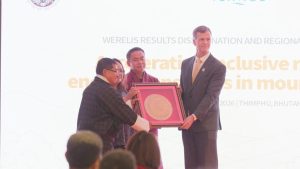
The Accelerating inclusive renewable energy transitions in mountain regions forum was jointly convened by Royal Government of Bhutan’s Department of Energy (DoE), International Centre for Integrated Mountain Development (ICIMOD), Bhutan Ecological Society (BES), and the Women’s Empowerment through Renewable Energy Powered Decentralised Lift Irrigation Systems in Bhutan (WERELIS – Bhutan) project, supported by the International Development Research Centre (IDRC), Canada.