FROM RISK TO RESILIENCE: NATURE-BASED SOLUTIONS FOR A GREEN, RESILIENT AND INCLUSIVE HINDU KUSH HIMALAYA
Paro, Bhutan. 25-27 November 2025
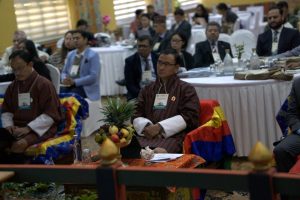
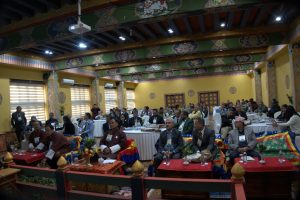
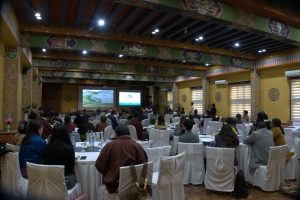
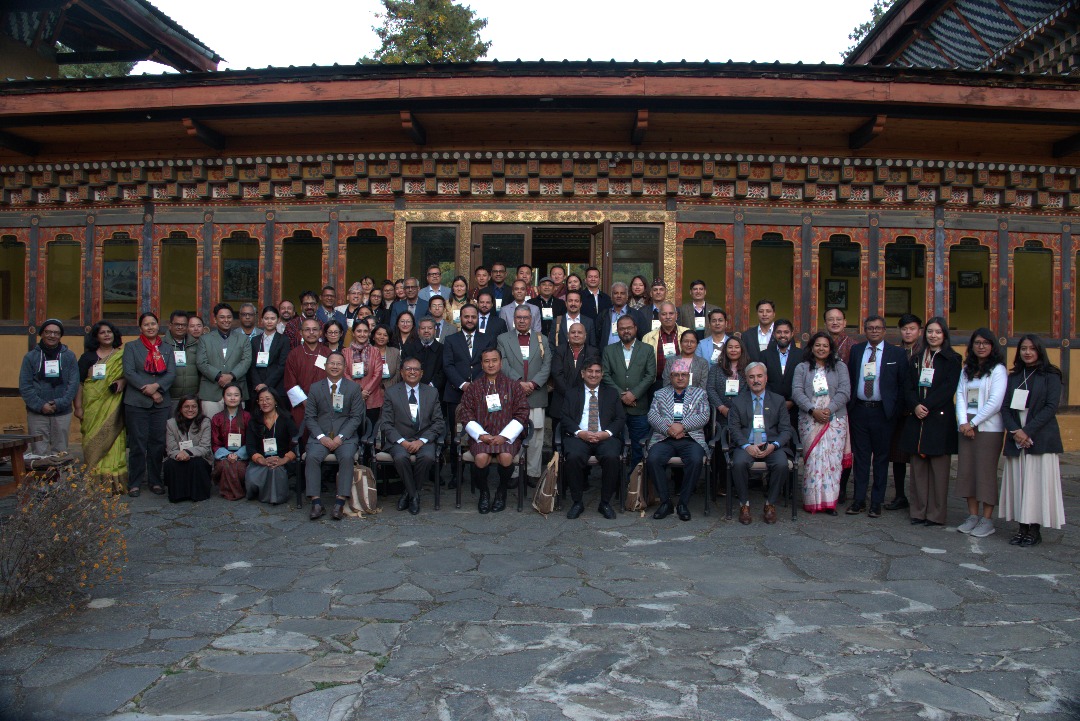
The International Centre for Integrated Mountain Development (ICIMOD), in collaboration with the Ministry of Energy and Natural Resources (MoENR) of the Royal Government of Bhutan, inaugurated the Third Hindu Kush Himalaya (HKH) Science-Policy-Finance Dialogue (SPFD) today in Paro, Bhutan. The high-level regional forum brings together policymakers, researchers, scientists, community representatives, and financial institutions to advance Nature-based Solutions (NbS) for resilience across the Hindu Kush Himalaya region.
The HKH region often referred to as the “Third Pole” is a critical global resource, home to vast glaciers, rivers, plateaus, and valleys that support the water, food, and energy needs of nearly two billion people. It is one of the world’s richest biodiversity hotspots, hosting unique alpine ecosystems, rare medicinal plants, and culturally significant species. The region is also home to rich cultural heritage, Indigenous knowledge systems, and diverse spiritual traditions.
Despite its global importance, the HKH faces mounting challenges: increasing water insecurity, rising disaster risks, rapid biodiversity loss, declining livelihoods, and growing vulnerabilities intensified by climate change and environmental degradation.
Nature-based Solutions are emerging as transformative, cost-effective, and sustainable approaches to address these challenges. By leveraging the natural functions of forests, wetlands, rangelands, and agricultural landscapes, NbS enhance water security, improve ecosystem services, support local livelihoods, reduce disaster risk, and contribute to climate adaptation, mitigation, and the Sustainable Development Goals.
“Nature-based Solutions help us protect, restore, and manage our fragile mountain ecosystems while also addressing social and economic challenges. NbS can deliver long-term climate resilience, healthier ecosystems, and improved well-being for mountain communities. I am delighted to see the strong participation of researchers, and policy makers from the Hindu Kush Himalaya countries and abroad in this Dialogue. Your engagement shows a shared commitment to deepen knowledge, exchange lessons, and build partnerships. said Pema Gyamtsho, Director General of ICIMOD in a video message.
Chief guest, Dasho Karma Tshering, Secretary, Ministry of Energy and Natural Resources, Bhutan said, “Nature-based solutions support inclusive development and build long-term resilience across borders. This is a crucial platform where science informs policy, policy guides finance, and finance shapes action. Only when these three pillars reinforce one another can we build true mountain resilience.”
Recognising Bhutan’s global leadership in environmental conservation including its achievement as a carbon-negative country the Dialogue offers participants valuable insights into how Bhutan has effectively translated environmental challenges into policy innovations and community-led successes. This year’s SPFD provides a regional platform for strengthening science-policy-finance interfaces, fostering collaboration among HKH countries, and identifying priority pathways for scaling up NbS to enhance resilience across the region.
Objectives of the Third HKH Science-Policy-Finance Dialogue
The Dialogue aims to:
• Facilitate informed discussion on strengthening science-policy-finance interfaces to accelerate the mainstreaming and upscaling of NbS across the HKH.
• Highlight innovations, evidence, and best practices in NbS for water security, sustainable livelihoods, and disaster risk reduction.
• Discuss enabling financial mechanisms—including climate, development, and blended finance—to expand the adoption of NbS.
• Strengthen regional cooperation and partnerships to support inclusive, green, and resilient development pathways.
Expected Outcomes:}
• Clear pathways and evidence-based recommendations to inform national policy and investment decisions for mainstreaming NbS.
• Improved understanding of existing NbS knowledge, policies, and financing frameworks, with gaps identified for further action.
• Shared lessons and experiences on NbS effectiveness in relation to water management, disaster risk reduction, livelihoods, and ecosystem health.
• Strengthened regional partnerships and networks to support collaborative NbS implementation across HKH countries.