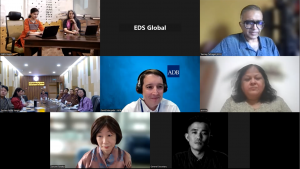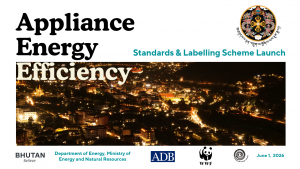
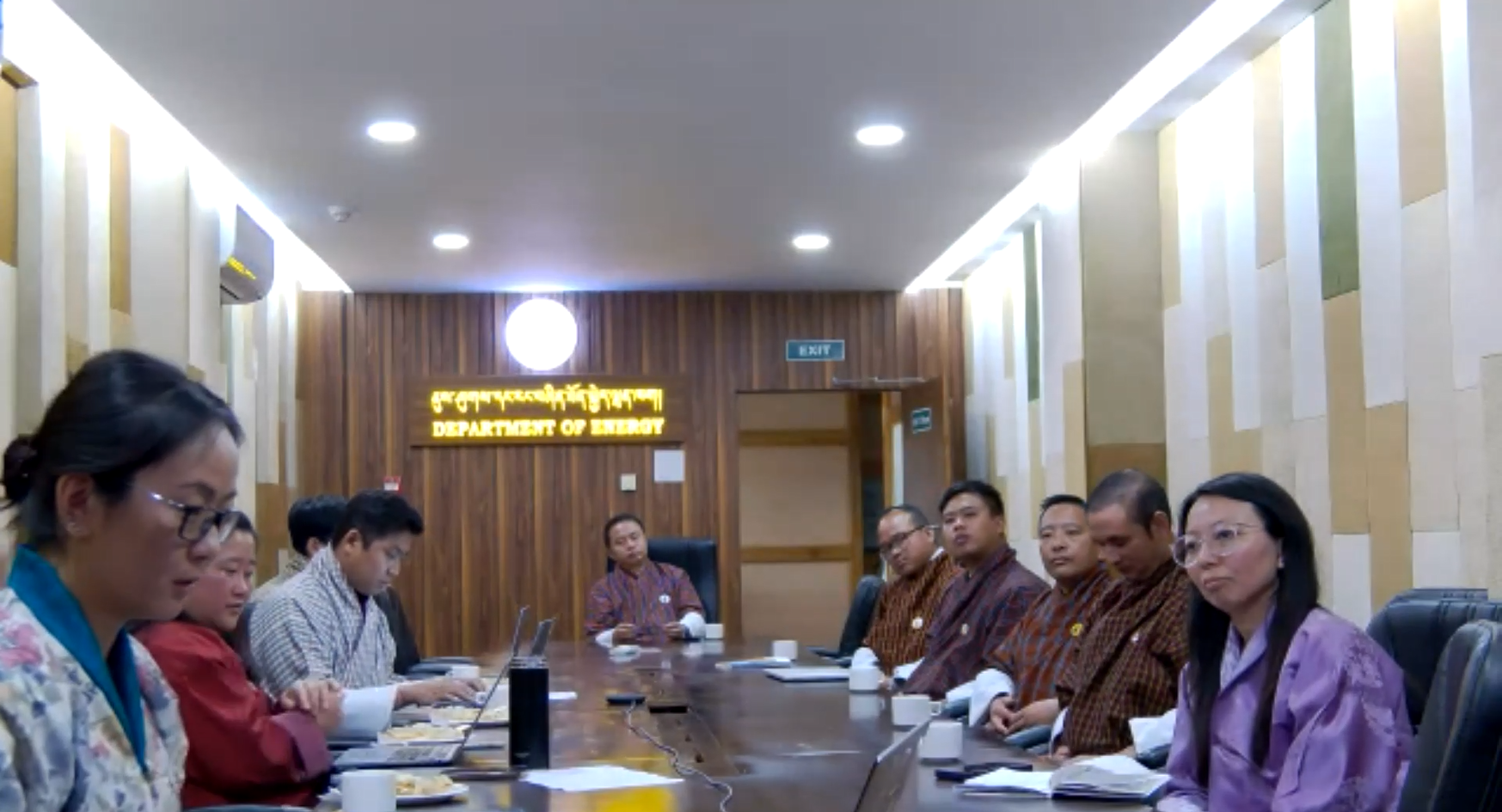
The Department of Energy, Ministry of Energy and Natural Resources, officially launched Bhutan’s Standards and Labeling (S&L) Scheme today, marking a major milestone in the country’s efforts to promote energy efficiency, empower consumers, and strengthen energy security. The event was held in a hybrid format, bringing together participants both physically and virtually, with remarks delivered by the Asian Development Bank, private sector representatives, and technical consultants.
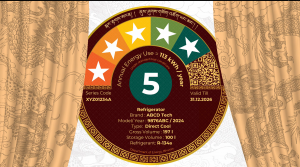
The S&L Scheme is designed to provide consumers with clear and reliable information on the energy performance of electrical appliances through standardized energy labels. In this phase, the S&L scheme Minimum Energy Performance Standards (MEPS) and labels for LED lamps, Storage Water Heatersand Refrigerators has been developed. The initiative will encourage the adoption of energy-efficient models under these products, reduce electricity consumption, lower greenhouse gas emissions, and help consumers make informed purchasing decisions.
Speaking at the launch event, the Director General highlighted that energy efficiency remains one of the most cost-effective strategies for addressing growing energy demand while supporting Bhutan’s commitments to sustainable development and climate action. The scheme is expected to play a key role in improving the efficiency of appliances entering the Bhutanese market and preventing the country from becoming a destination for inefficient products.
The development of the S&L Scheme represents the culmination of several years of collaborative effort involving government agencies, development partners, technical experts, and private sector stakeholders. The initiative was first initiated under the USAID South Asia Regional Energy Partnership (SAREP) Programme, subsequently supported by WWF-Bhutan, and successfully completed through the Asian Development Bank’s Technical Assistance programme.
The Department expresses its sincere appreciation to the Asian Development Bank, WWF-Bhutan, Environment Design Solutions, members of the Technical Working Group, and all stakeholders who contributed to the successful development of the scheme. Their technical expertise, guidance, and continued support were instrumental in ensuring that the scheme aligns with national policies, regulatory frameworks, and international best practices.
The launch marks the beginning of the implementation phase, during which the Department will work closely with the technical working group agencies, importers, retailers, and consumers to operationalize the scheme. Continued stakeholder engagement will be critical to ensure its effective adoption and long-term success.
Building on this achievement, the Department also intends to expand its energy efficiency initiatives through the development of MEPS for key appliances and equipment, including solar photovoltaic panels, inverters, electric motors, and air conditioners.
The Department reaffirms its commitment to advancing energy efficiency as a cornerstone of Bhutan’s sustainable energy transition and looks forward to working with all stakeholders in realizing the objectives of the Standards and Labeling Scheme.