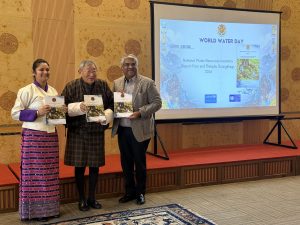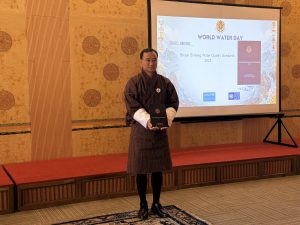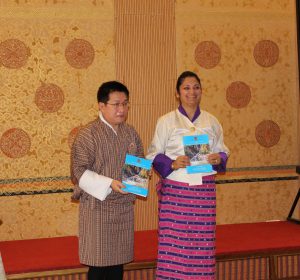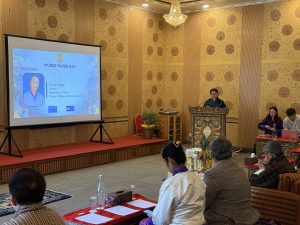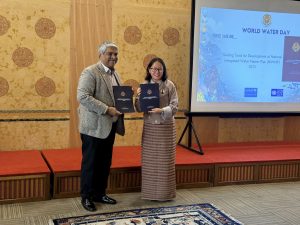
MoENR, MoIT and UNICEF release four key reports linking water security with gender and climate resilience.
Setting a new course for water security in Bhutan and highlighting the link between water and gender equality, the Department of Water (DoW), Ministry of Energy and Natural Resources, Royal Government of Bhutan (MoENR), Department of Infrastructure Development, Ministry of Infrastructure and Transport, Royal Government of Bhutan (MOIT) and UNICEF Bhutan launched four reports during the observation of World Water Day today.
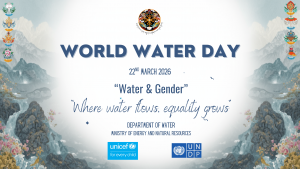
World Water Day, observed annually on 22 March, focuses global attention on the importance of water resources and the urgent need to solve the emergent water crisis. This year’s theme ‘Water and Gender’ highlights how women and girls, who must be at the centre of water solutions to build a more equal and sustainable future.
According to Bhutan’s Gender Action Plan, 2021, water scarcity is deeply gendered, with women and girls carrying the heaviest burden of collecting and managing water while remaining under-represented in decision making. The Gender Action Plan calls for mainstreaming gender into climate and water adaptation projects, to strengthen Bhutan’s resilience in water‑stressed communities while easing the disproportionate burden carried by women and children.
The National Water and Sanitation Report 2025, produced through Water and Sanitation Information System (WaSIS), offers the first reliable nationwide snapshot of Water, Sanitation and Hygiene (WASH) services. It shows strong progress in sanitation with nearly universal basic access and 90 per cent safely managed services but reveals a major gap in drinking water, with just over half the population, 51.2 per cent, dropping from 63 per cent as reported in the National Health Survey report 2023, enjoying safely managed supply.
The National Water Resources Inventory Report, 2026 confirms that Bhutan’s water security is under growing stress. Findings from two districts reveal the gravity of this issue. In Paro, 16 sources have already dried and 117 are drying, while in Thimphu two sources have dried and 110 are drying. Springs and streams, the lifelines for rural drinking water, are the most affected, with climate change, forest degradation, and development activities identified as key drivers.
Advisor to the National Environment Commission, MoENR, Dasho Peljor J Dorji, said that despite having one of the highest per capita water availabilities in the world, Bhutan is increasingly witnessing the impacts of climate change and other emerging issues.
“Recent assessments show that some water sources have already dried up, while many others are beginning to decline. These trends underscore the need for proactive and adaptive water resource management,” Dasho Peljor J Dorji said. “This year’s theme, ‘Water and Gender,’ urges us to recognise that inclusive and equitable water management is not only a matter of fairness but also a prerequisite for sustainable development.”
The Guiding Tool for Development of National Integrated Water Master Plan enhances inclusivity as it provides Bhutan with its first structured framework to move from fragmented water management toward a holistic, climate‑resilient, and inclusive approach. Built around six modules of baseline diagnosis, policy assessment, data management, capacity building, monitoring, and finance, the guiding tool ensures evidence‑based planning, stakeholder engagement, and accountability at every level.
UNICEF Representative Rushnan Murtaza, said that UNICEF’s partnership with the Royal Government of Bhutan for more than 50 years reaffirm that water and gender equality are closely linked.
“The lived experiences of communities in remote Bhutan underscore the urgency to restore springs and build climate resilient solutions that ease the burden on women and children,” Rushnan Murtaza said. “But they also show us something else: resilience, determination, and hope. Because when a community revives a water source, it revives more than a spring, it revives opportunity, dignity, and the possibility of a better future. So today, we must ask ourselves: Is this the Bhutan we promised our people? And what must we do, what must we commit to, so that safe and abundant water becomes a reality for all?”
The Department of Water in partnership with UNICEF Bhutan, has launched a pilot Climate Resilient Spring Water Source Revival initiative in Jurmey gewog, Mongar district, where families have faced drinking water shortage for decades.
Going beyond access and positioning safe drinking water as both a public health and a climate resilience measure, the Bhutan Drinking Water Quality Standards 2025 modernises the national framework for safe water by aligning with the latest WHO guidelines and introducing updated chemical and microbiological parameters. The standards set clear accountability across ensuring systematic monitoring, water safety planning, and annual audits.
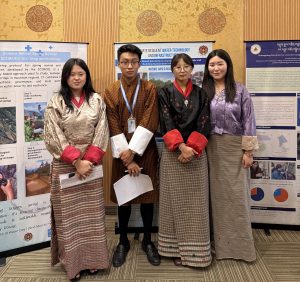
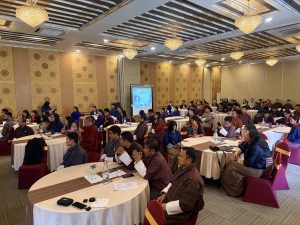
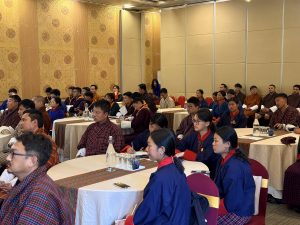
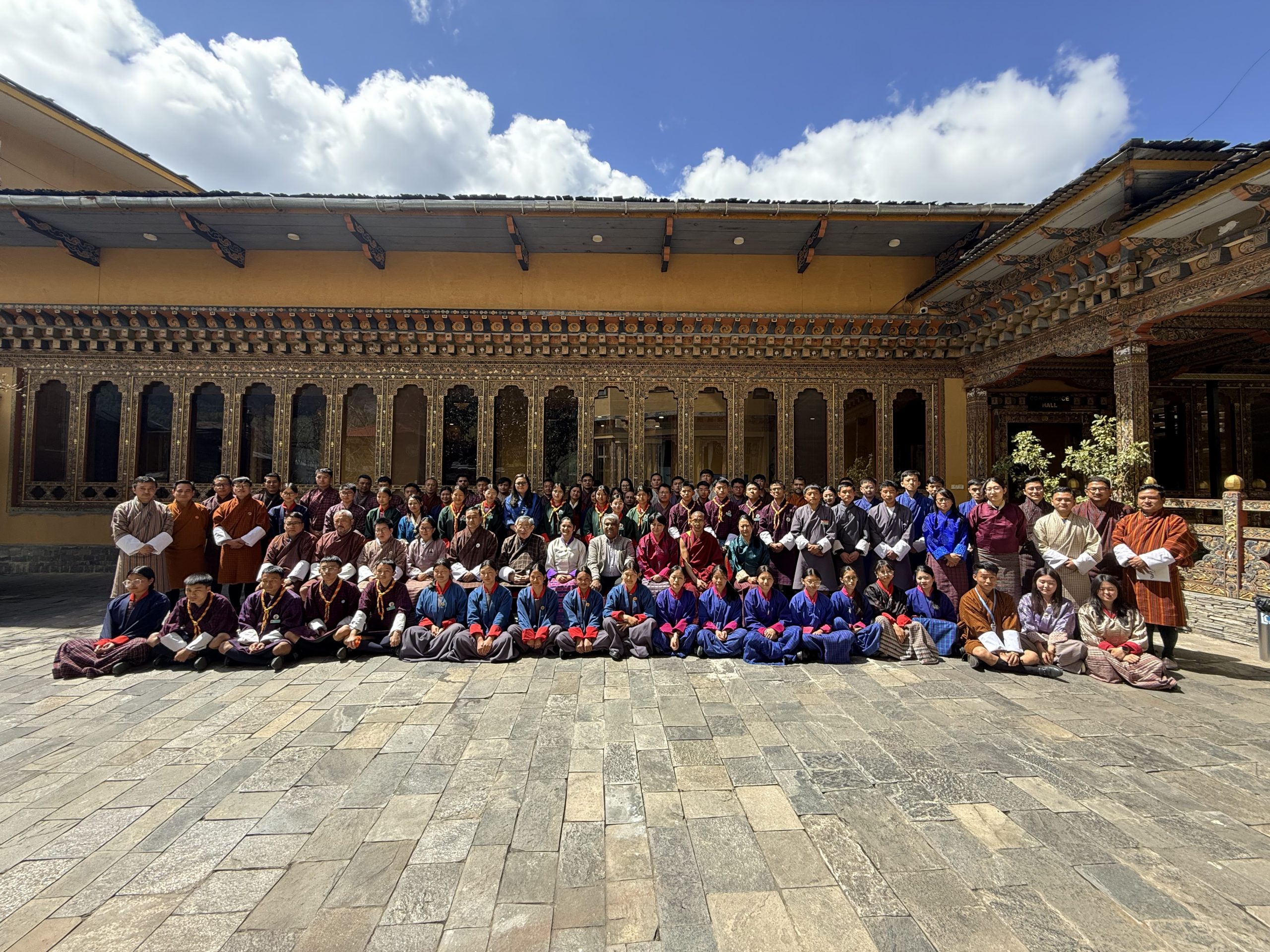
The event has brought together officials from Government agencies, International Organization, Non-Government Organization, Local Government Leaders and students to observe and reflect on the sustainable management and conservation of water resources. Students from the College of Natural Resources, Royal University of Bhutan shared about their work on water resources conservation and management while College of Science and Technology. students, highlighted their experience with climate resilient water technology and infrastructure. A female local government leader shared her experience in water resource management.
By the end of the 13th Five‑Year Plan, Bhutan will have universal access to safe drinking water, expand irrigation to boost food security and invest in climate‑resilient infrastructure and watershed protection, which would accelerate progress towards achieving the SDG 6 goal of Clean Water and Sanitation for All by 2030. @followers